Read a market report against your booking book
Use industry data as a comparison point, then check what your own guests are doing.

Which hotel market comparison fits your property?
Start with the report’s stay dates, geography, property types and definition of the measure. Check whether the figure represents actual stays or bookings at a point in time, and whether the date is preliminary. A monthly city average can be a fair starting point for a monthly plan. A single Friday may need a comparable local event, day of week and room mix to make a price decision useful.
How do you compare a headline with your booking book?
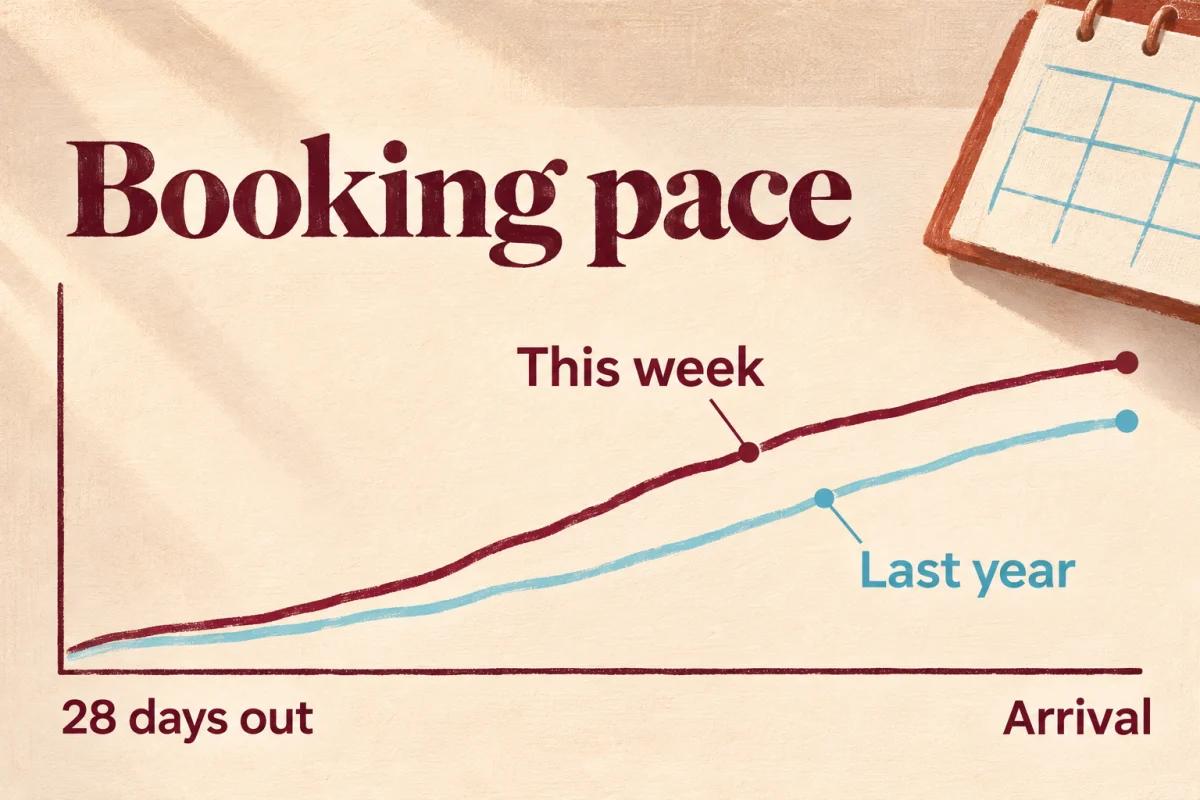
Pull your own figures on the same basis and in one currency. Compare room revenue on the same basis for taxes and inclusions where you can. For booking pace, use snapshots at the same lead time, such as 14 days before arrival. Record cancellations or block releases that explain large changes. If the report and the property use different definitions, write that difference beside the comparison before drawing a conclusion.
What if market rates rise and your pickup slows?
Suppose a report shows higher average rates across the region, but your next two Saturdays have gained two room nights each where past comparable Saturdays gained six by the same point. Check for local event dates, restrictions, room types closed for sale and any prior group allocation that made the comparison unusual. If your entry room is closed on a main channel, reopen it if appropriate and measure how bookings change before testing a rate increase.
How can you test one decision at a time?
Choose one stay period and change one rate, offer or minimum stay rule. Save the before snapshot with the room type, public rate and available inventory. Set a decision date and a comparison, such as net pickup on the same weekday with similar lead time. At review, record material changes such as a late group cancellation so the next person can judge how much weight to put on the result.
What should go in the revenue handover?
Include the report date and source, the stay dates covered, the chosen comparison and its limitations. Add the affected dates and channels, the owner and when they will check the result. Give the reservations team the exact dates and rules if they will quote the rate. Keep the before and after figures with the weekly review so the team can revisit the decision when the final stay data is available.
Continue with your team
- Domestic Tourism Statistics
Use Tourism Research Australia’s results to see how overnight trips, visitor nights and spending changed in your state or territory. Use your property records to calculate hotel occupancy and room revenue.
- Weekly revenue review
Put the comparison next to your own occupancy, rates and pickup.